Showing posts with label Bamboo. Show all posts

Friday, January 31, 2014

Thu Hong bamboo and rattan craft village

Many years ago, when talking about furniture, the residents in the old imperial capital of Thang Long (present-day Hanoi) had a saying “Wooden houses by the Khmer and bamboo houses by Hong Village’s artisans” to praise the traditional craft of making bamboo and rattan products that has existed for 300 years in Thu Hong Village in the commune of Xuan Thu, Soc Son District, Hanoi.


According to history books, the people in Thu Hong Village (present-day Thu Thuy), located near the Ca Lo River, have practiced the traditional craft of making bamboo furniture since the reign of King Le Canh Hung (1740-1786).


At that time, over 30% of the village’s households engaged in building houses and making tables, chairs, beds and other interior decorations from bamboo.


According to Nguyen Van Ky, the owner of a bamboo furniture workshop in the village whose family has, for many generations, been creators of the traditional crafts, the villagers often buy the bamboo materials in the provinces of Bac Can, Hai Duong and Cao Bang.


Sometimes, they even travel to villages to select each cluster of bamboo to ensure the quality of the materials.


The bamboo trunk is used to make the beds’ legs and chairs while bamboo twigs are used to make bamboo splints and fine art articles.


With secret techniques on chiseling handed down by their ancestors, the villagers have made different beautiful and durable products which are the favourites of customers from Germany, Russia and the US.


Over the years, the traditional craft has strongly developed in the village and many small workshops have now become large enterprises specializing in bamboo and rattan products for export.


One of them is Bong Mai Bamboo and Rattan Co. Ltd. Phan Van Mao, Director of the company, said that the company has provided the market with diverse categories of bamboo and rattan products, such as settees, tables and chairs, which are made in both modern and traditional style, meeting the requirements for quality, durability and colour.


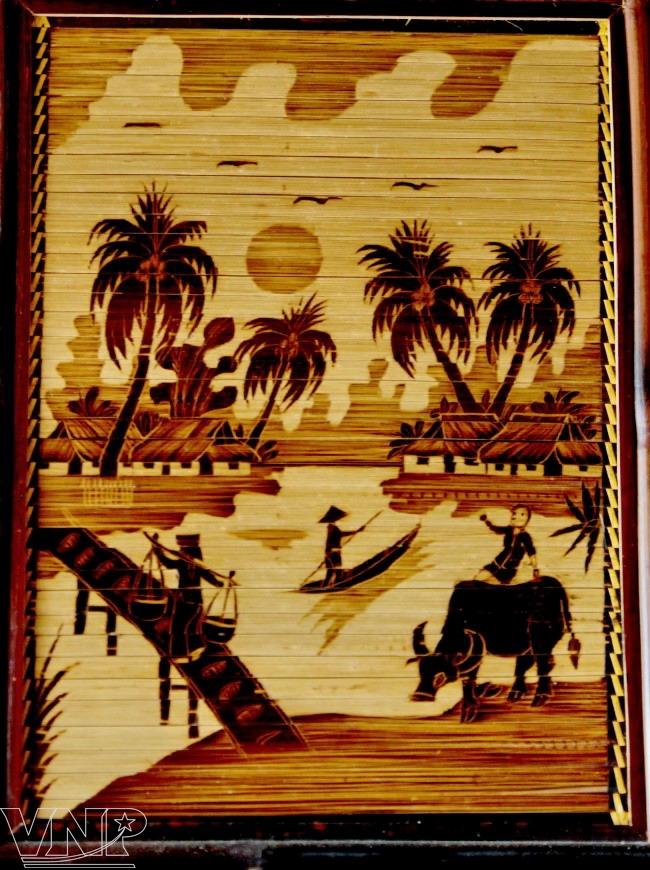
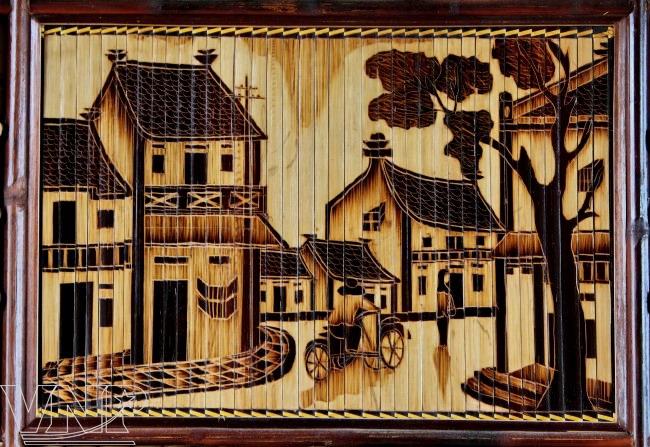
Besides traditional products, the village is famous nationwide for bamboo paintings which bring the locals a considerable source of income.


With a desire to preserve and develop the traditional craft, the local authorities have created favourable conditions for the villagers to make high-quality products for export and encouraged the establishment of large-scale private enterprises to help the trademark of Thu Hong bamboo products affirm its position in the market.


thu hong village, bamboo, craft village

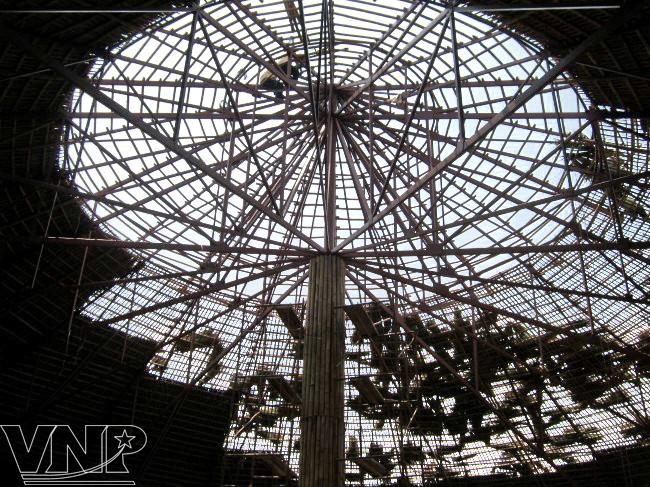
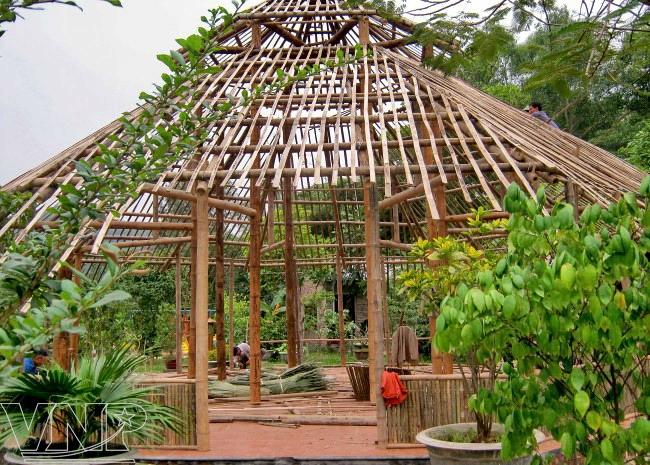
A “Bat Giac” (eight sided) house is made from bamboo.


thu hong village, bamboo, craft village


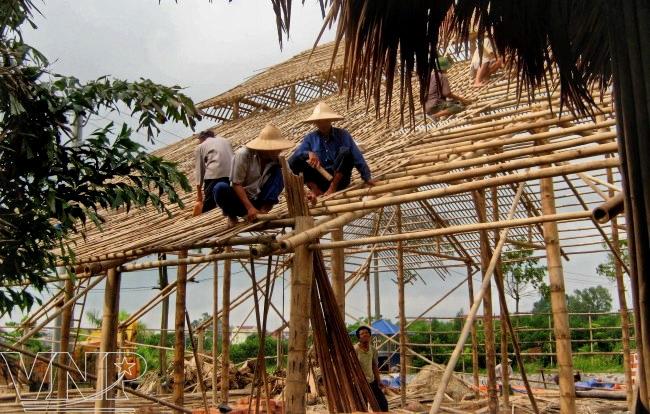
Thu Hong Village’s artisans make unique houses from bamboo.


thu hong village, bamboo, craft village


Thu Hong Village’s artisans are well-known for making houses from bamboo.


thu hong village, bamboo, craft village


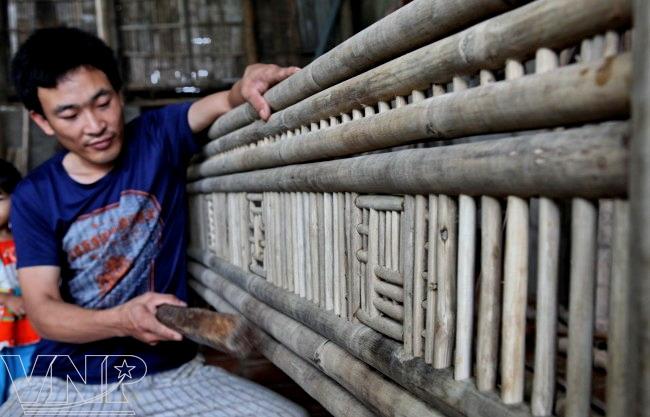
Making bamboo furniture.


thu hong village, bamboo, craft village


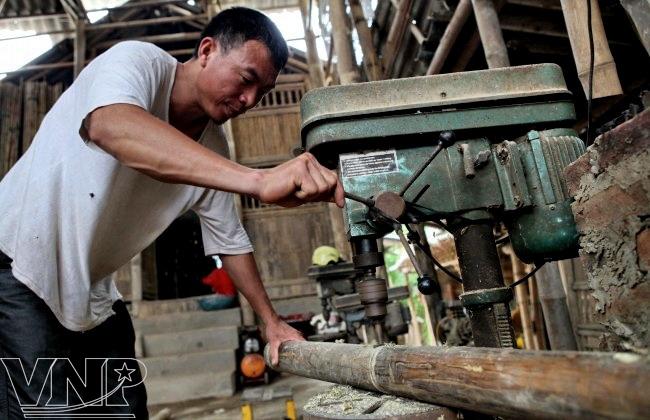
Many housholds invest hundreds of million dong in machines for producing.


thu hong village, bamboo, craft village


Bamboo paintings made by Thu Hong villagers.


thu hong village, bamboo, craft village

Bamboo painting  with the theme “Hanoi Old Quater”  is sought much after by foreign tourists.


Thu Hong bamboo and rattan craft village

Friday, November 22, 2013

Bamboo in Culture and Legend

Bamboo has important cultural significance in many Asian societies. It has played an instrumental role in the development of so much—in building, in cooking, in medicine, in clothing, the list goes on.


20131123-111055.jpg


Accordingly, it has become symbolic for many cultures. In India, for example, bamboo is a symbol of friendship. And in China, bamboo is considered to be a symbol of longevity, as a result of its long lifespan. There are even creation myths involving bamboo.

Several Asian cultures believe that humanity emerged from a bamboo stem. The Japanese have a folktale called the “Tale of the Bamboo Cutter,”

which tells the story of a princess who, after living on the moon, emerges from a glowing piece of bamboo. Another bamboo-inspired tale is the Philippine creation story; in it, the first man and

woman both emerge from split bamboo stems. Malaysia has a similar tale: In theirs, there is a man who, while sleeping under a bamboo plant, dreams of a beautiful woman; when he wakes up, he breaks the bamboo stem and discovers her inside.


20131123-111030.jpg


Outside of legend, bamboo is intertwined with worship and ritual in other ways. For instance, Shinto shrines in Japan are often surrounded by bamboo forests as part of a sacred barrier against evil. Similarly, Buddhist temples often have bamboo groves.


In Vietnam, bamboo has very important cultural significance. It acts as a symbol for the Vietnamese spirit. It represents hard work, straightforwardness,

optimism, unity, courteousness, and adaptableness. There is even a bamboo-inspired proverb in Vietnam: “When the bamboo is old, the bamboo sprouts appear,” it says. Its message is one of immortality: The Vietnamese nation will never die.

Though its people might, there will always be a younger generation to take their place, to keep Vietnam alive. In this spirit, many traditional Vietnamese villages have bamboo hedges surrounding them.


20131123-111044.jpg


The Vietnamese also have a famous love story that involves bamboo. The tale is known as “The Hundred-knot Bamboo Tree.” It is about a poor, young farmer who falls in love with his landlord’s beautiful daughter. The landowner promises the young man marriage to his daughter if he works hard for another three years, but then goes back on his word, promising his daughter to another man.

The young farmer protests, and the landowner responds by cutting him another deal: If he can bring him a bamboo stalk with one hundred knots, he can have her hand in marriage. The farmer runs into a bit of luck. During his search, Buddha appears and gives him the magic to combine multiple bamboo stalks. This allows him to accomplish his task, and ultimately marry the landlord’s daughter.


So, as you can see, bamboo is, in many cultures, held in quite high esteem. And whether or not you believe the legends, there is one thing that remains as true in the myths as it does in reality: Bamboo is a wonderful and useful plant – whether it’s being used to build houses or as a means to marry the love of one’s life.


Bamboo in Culture and Legend